Arts8 min read
Chrysanthemums in China: Autumn's Flower, and the Late Bloomer's
In China the chrysanthemum means longevity, not funerals. The late bloomer's flower, on the Double Ninth table and in Tao Yuanming's garden.
By Wen Su — Writer & Editor
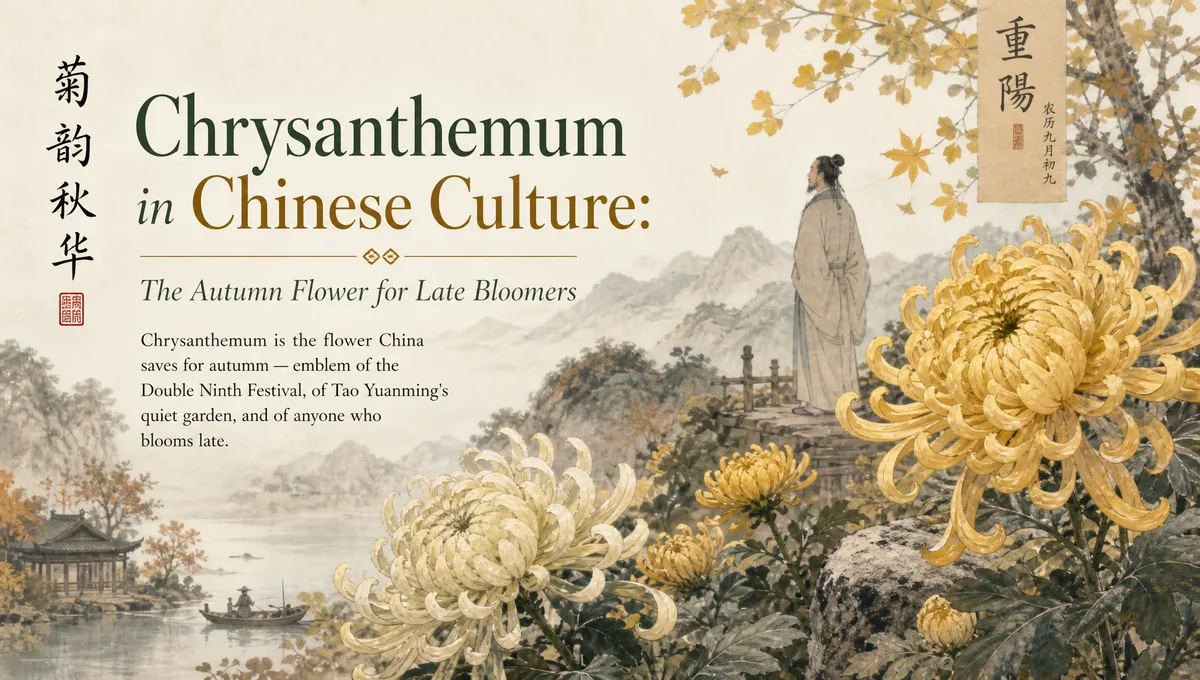
Most flowers in China have a season. The peony takes spring. The lotus takes summer. The plum blossom takes the coldest weeks of winter.
The chrysanthemum takes autumn, after the show is over.
That timing is the whole story. A flower that opens when the others have finished is easy to read as an argument about lateness. Chinese poetry made that argument for more than a thousand years. The flower became the emblem of the Double Ninth Festival, a standard subject in ink painting and, in ordinary homes, a cup of pale tea in October.
Here is where it sits in the calendar, why painters and poets kept returning to it, and four quiet ways to use it this autumn.
The Flower That Waits for the Rest of the Garden
Chrysanthemums (júhuā) are autumn flowers. In most of China they open from September into November, when the nights are cool and the light has softened.
The plant began as a wild autumn species and was cultivated very early. By the Tang dynasty (618–907), growers were already raising large-flowered varieties for display. Centuries of selection followed. There are thousands of named cultivars today, in yellow, white, pink, purple and green.
Their shapes are a separate pleasure. There are pompons, quills, spiders with long curling petals, and cascades trained over a frame until they hang like a fountain. A single trained plant can carry hundreds of blooms.
Two habits of the flower matter for everything that comes later.
It is hardy. Frost does not stop it.
And it holds its shape. A chrysanthemum in full bloom does not collapse the way a peony does. It sits there, upright, for weeks.
Both facts are easy to turn into a metaphor about age. Chinese writers did exactly that.
Why the Chrysanthemum Belongs to the Double Ninth
The Double Ninth Festival falls on the ninth day of the ninth lunar month, usually in October. It is the one festival on the Chinese calendar that is openly about growing older, and since 1989 it has also been the country’s day for older people.
The customs are few, and the chrysanthemum is one of them. Displays open in parks around the festival. Families drink chrysanthemum wine, traditionally brewed from the first flowers of the year. The flower is worn, painted and quoted for the whole month.
There is a neat logic in the pairing. Nine is the largest single-digit yang number, so the ninth day of the ninth month is a day of doubled brightness. The sound of “double nine” is identical to the sound of “long lasting”. A festival about longevity, held in the season of the flower that lasts — the whole thing hangs together without anyone having to explain it.
For the hills, the cake and the poem behind the day, see our piece on the Double Ninth Festival.
Tao Yuanming’s Fence, and the Case for Blooming Late
The most quoted chrysanthemum line in Chinese comes from Tao Yuanming (365–427), a minor official who resigned, went home and farmed.
His poem describes picking chrysanthemums by the eastern fence and, with nothing in particular on his mind, seeing the southern mountains. That is the entire scene. The line works because of what it leaves out: no ambition, no hurry, no audience.
Tao became the model of the scholar who chooses a smaller life on purpose. The chrysanthemum became his flower — the emblem of the person who does not arrive early and does not mind.
This is where the Western phrase “late bloomer” meets something older. In this tradition, blooming late is not a consolation prize. It is a description of a good life. The flower is admired for the season it chose, not for beating the others to it.
Readers who like this thread will find more of it in our selection of classical poems about aging and solitude.
One of the Four Gentlemen
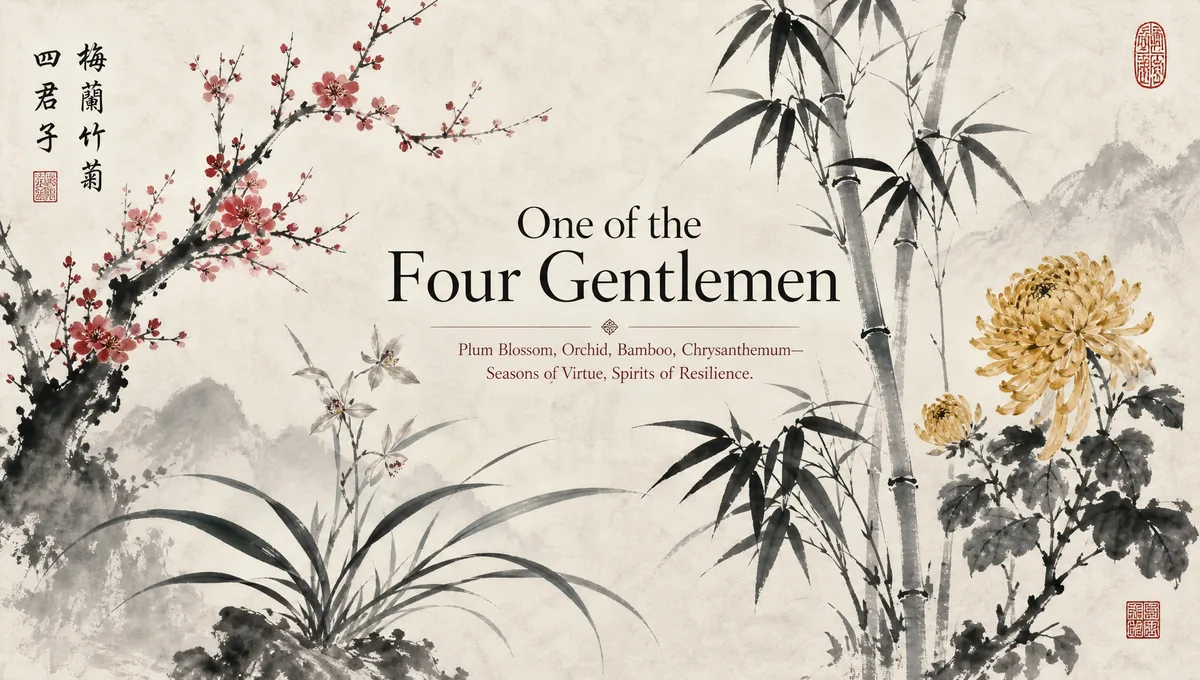
Chinese painting groups four plants as the sì jūnzǐ, the Four Gentlemen: plum blossom, orchid, bamboo and chrysanthemum. Each carries a season and a temperament.
- Plum blossom — winter, and stubbornness.
- Orchid — spring, and refinement in obscurity.
- Bamboo — summer, and flexibility under pressure.
- Chrysanthemum — autumn, and quiet persistence.
Ink painters returned to the chrysanthemum for practical reasons as well as symbolic ones. The petals give a brush a workout: many strokes, each with a different pressure, and no way to correct a mistake on absorbent paper.
That is why the flower turns up so often in beginner practice and in the work of retired painters. Painting one is a study in steadiness — the same quality the flower is supposed to stand for. Our article on calligraphy as a focus practice covers the brushwork side of this.
What Chrysanthemum Tea Actually Is
In Chinese households, the chrysanthemum’s most common form is not a painting. It is a drink.
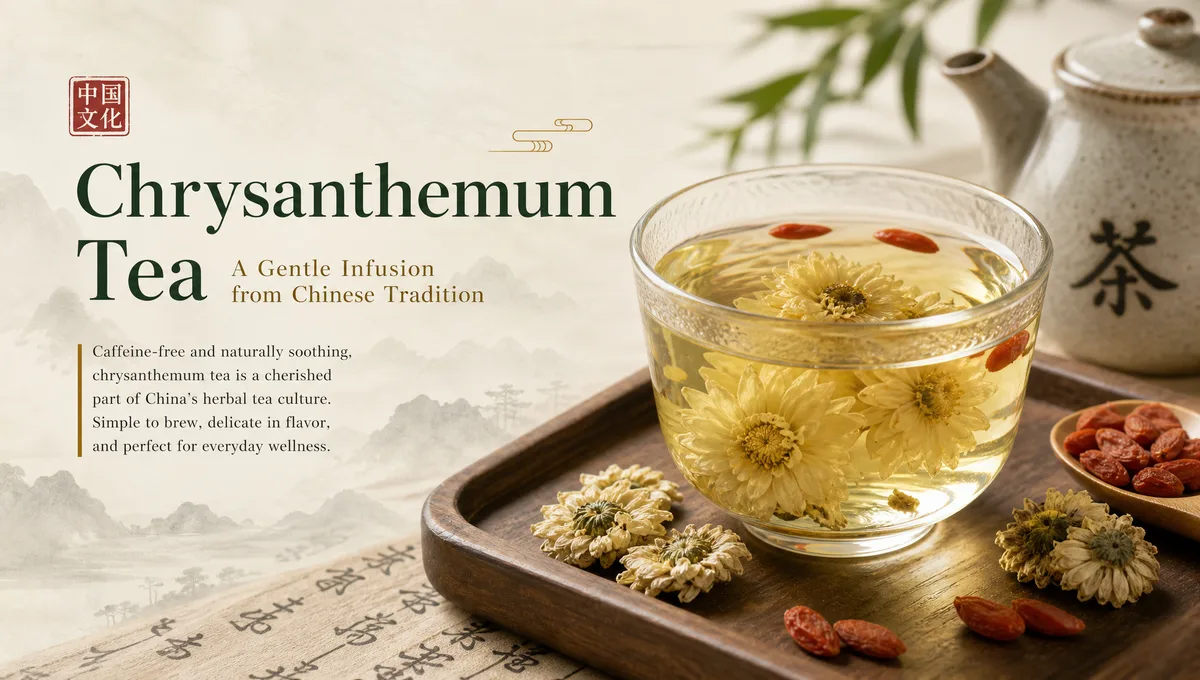
Chrysanthemum tea (júhuā chá) is made from whole dried flower heads steeped in hot water. It contains no caffeine and no tea leaves at all — it is an infusion, in the same family as chamomile or mint. Pale yellow flowers give a lighter cup; the white varieties are softer still.
A typical home method:
- Three to five dried flowers in a glass or a small pot.
- Water just off the boil, around 85–90°C.
- Two to three minutes, then drink. The same flowers will take two or three refills.
- Optional: a few goji berries, or a small piece of rock sugar.
A good glass teapot is worth it here, because the flowers open as they steep. Buy from a tea shop rather than a supermarket shelf if you can, and keep the flowers in a sealed jar away from light. They last about a year before the scent fades.
In Guangzhou, teahouses often serve chrysanthemum with pu’er, a combination called júpǔ. Elsewhere it is simply an everyday autumn drink, the way mint tea is in other countries.
One honest note. In Chinese household tradition the chrysanthemum is classified as a cooling flower, which is why it belongs to the hot end of the year. That classification is a cultural one, not a medical statement, and this site does not give medical advice. The drink is pleasant, gentle and caffeine-free, which is reason enough.
Four Quiet Things to Do This Autumn
None of these takes an afternoon.
- Drink one cup slowly. Brew it as above and give it the twenty minutes you would give coffee. The point is the pause, not the flower.
- Go somewhere higher than your street. A hill, a tower, a rooftop. This is the Double Ninth instruction, and it is best done in the late light of an October afternoon.
- Copy one line of chrysanthemum poetry. Tao Yuanming’s fence line is ten characters in Chinese. Write it once in English, then once as a shape you copy. No talent required.
- Visit a display if your city has one. Large chrysanthemum shows run from late October into November in many Chinese cities. The cultivars are the draw: football-sized blooms, spider petals, cascades trained into shape.
If you cook with the season too, the food side of autumn sits in our guide to Chinese seasonal eating.
White Chrysanthemums Mean Something Else in Europe
A short warning for readers who like giving flowers.
In China, chrysanthemums carry no funeral association. They are autumn flowers, and the yellow ones are festive.
In parts of Europe, white chrysanthemums mean graves and mourning. France, Italy, Spain and Poland are among those countries. The flowers open into November, around All Saints’ Day, and a bouquet of white ones can land badly there.
In Japan, the same flower is the crest of the imperial family.
Three cultures, three meanings, one plant. Flower symbolism is local, and it is worth checking before you hand someone a bunch.
Common Questions
Does chrysanthemum tea contain caffeine? No. There are no tea leaves in it, only dried flowers.
Can you eat the flowers? Petals appear in some dishes and in rice wine. Use culinary-grade flowers from a shop or a known grower — garden and florist plants are usually sprayed.
Why do Chinese poems call it “the yellow flower”? Huáng huā, yellow flower, is a common literary name for the chrysanthemum, because yellow is its classic colour.
Is the chrysanthemum really a late bloomer? In the gardening sense, yes. It flowers when the light is fading and the nights are cold, after most garden plants have stopped.
When is the Double Ninth Festival this year? It follows the lunar calendar, so the date moves. It always lands in October. Our festival explainer covers the details.
The Last Flower of the Year
The chrysanthemum is a small thing to build a philosophy on. But that is what the tradition did. It is why the flower keeps turning up, in poetry, on scrolls, and in a glass of pale tea on a cool evening.
Its claim is modest and worth borrowing. The season you bloom in is not a verdict on you.
Pour yourself a cup of it this month. Go and look at the landscape from somewhere higher than usual. And if you want more of this corner of Chinese culture, our Culture & Arts section collects the rest.