Wellness4 min read
A Three-Minute Morning Stretch: Waking Up Slowly
Three quiet minutes after waking — a slow stretch to meet the day, borrowed from the habits of Chinese park mornings. The moves, and why slow beats quick.
By Lian Zhao — Copy Editor
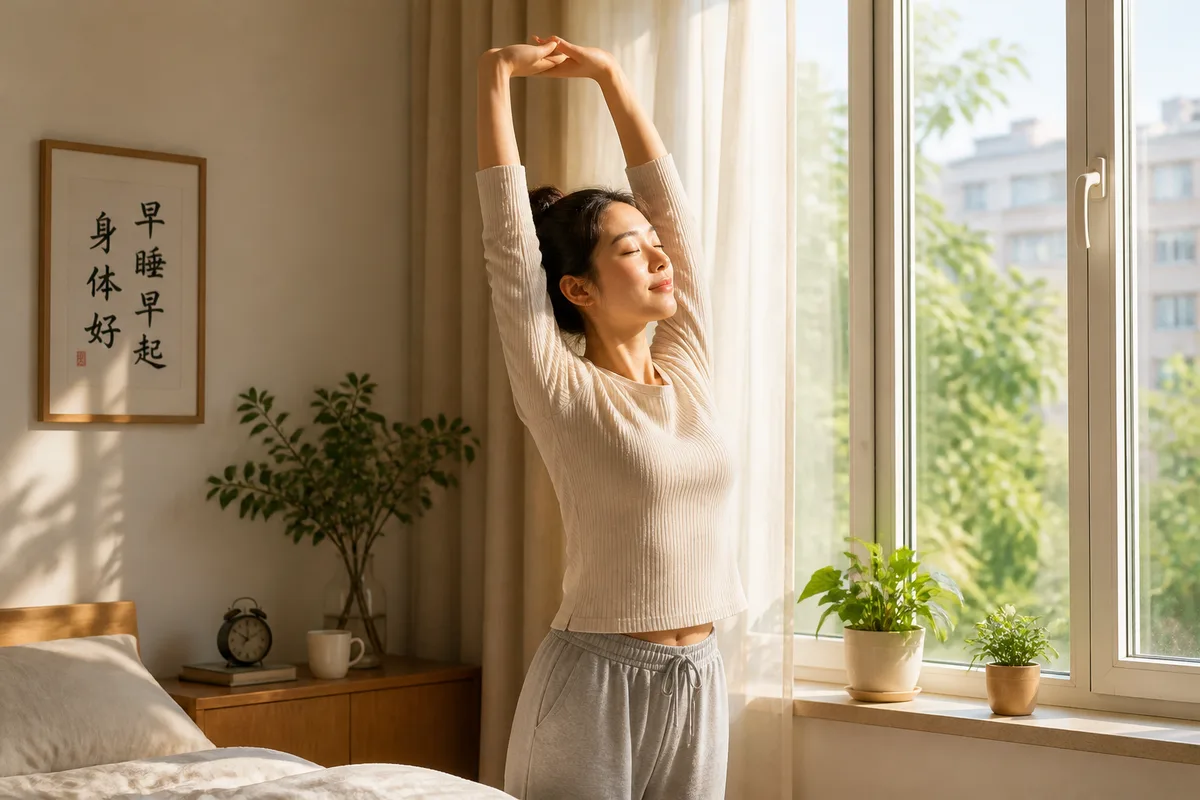
The first three minutes after waking set the tone for everything after them.
In China’s parks, those minutes are handled slowly. People arrive before work, raise their arms, bend gently, and let the body wake up at its own pace. Nobody is in a hurry, and that is the point.
This is a three-minute version of the same habit, small enough to do before the kettle boils.
Why Slow, Not Quick
A morning stretch works differently depending on the speed.
A quick stretch feels like exercise — the body snaps into action, and the mind with it. A slow stretch feels like a transition. You are not forcing the day to start; you are letting yourself arrive in it.
The difference matters most in the first minutes, when everything is still half-asleep. Slow is not a softened version of quick. It is a different thing altogether. In the parks the pace is set by the oldest people in the group. If an eighty-year-old can afford to move slowly, the rest of us can too.
Three Minutes, Five Moves
None of these needs a mat or a change of clothes. Do them beside the bed, or standing by a window.
- Reach up, slowly. Clasp the hands, turn the palms out, and reach toward the ceiling. Let the breath out as you reach.
- Look left and right. Turn the head gently to one side, pause, then the other. No forcing, no bouncing.
- Roll the shoulders. Lift them to the ears, then let them drop. A few slow circles in each direction.
- Side bend. Stand with feet apart, one arm over the head, and lean gently to the side. Then the other side.
- Circle the ankles. Hold something steady, lift one foot a little, and turn the ankle in slow circles. Then the other.
The whole thing takes about three minutes. Do each move a few times, slowly, and stop. The five moves cover the whole body without asking much of it — neck, shoulders, sides and ankles. None of them should feel like work.
The Difference Between Stretch and Strain
The line that matters is not how far you go. It is whether you are pulling.
A stretch should feel like a long, easy reach. A strain feels sharp or forced. If it hurts, stop — pain is information, not progress. And if you have a joint problem or anything that concerns you, ask your doctor before adding a new movement, even a gentle one.
Where It Comes From
The habit is borrowed from the slow end of Chinese morning practice. It is the same family as the older people in the parks doing their rounds, and the standing practice that asks you to hold still.
None of it is exercise in the gym sense. It is waking, done on purpose. The slow stretch and the standing practice share one idea: the body does not need to be rushed into the day.
The Phone Can Wait
The hardest part of the ritual is not the stretch. It is the phone.
Reaching for it first thing hands the day over to other people’s urgency before you have even opened your eyes. The three minutes are partly a way of keeping that from happening — a small, deliberate gap between waking and the world.
Put the phone across the room the night before, and the stretch becomes easier. You have already given yourself the first three minutes.
A Morning, Step by Step
Here is the whole ritual, in order.
- Wake, and do not reach for the phone
- Sit up slowly and put both feet on the floor
- Do the five moves, taking the full three minutes
- Drink a glass of water
- Then let the day start
The order matters. The stretch comes before the screen, before the news, before the first decision.
Common Questions
How long should I hold each stretch?
A few slow breaths, or about ten to fifteen seconds. There is no need to hold longer than feels comfortable.
Do I need to do it every day?
No. It helps most when it is regular, but the point is to wake slowly, not to keep a perfect streak.
Can I do it sitting down?
Yes. The first four moves work seated, with the feet flat and the back away from the chair.
Is this medical advice?
No. It is a waking ritual with a long history and no claims attached. If you have pain or a condition, check with your doctor before starting.
Three Quiet Minutes
The stretch is not a workout. It is a way of arriving at the day, one slow reach at a time.
If the idea appeals, the park-morning habit is where it comes from, and standing still is its quieter cousin. More gentle practices live in the wellness section.