Wellness4 min read
Winter Hands: Warm Water, a Tin of Grease, and Rubbing
The first thing winter exposes is your hands. How a Chinese winter keeps them warm — warm water, a tin of grease, and the habit of rubbing them together.
By Lian Zhao — Copy Editor
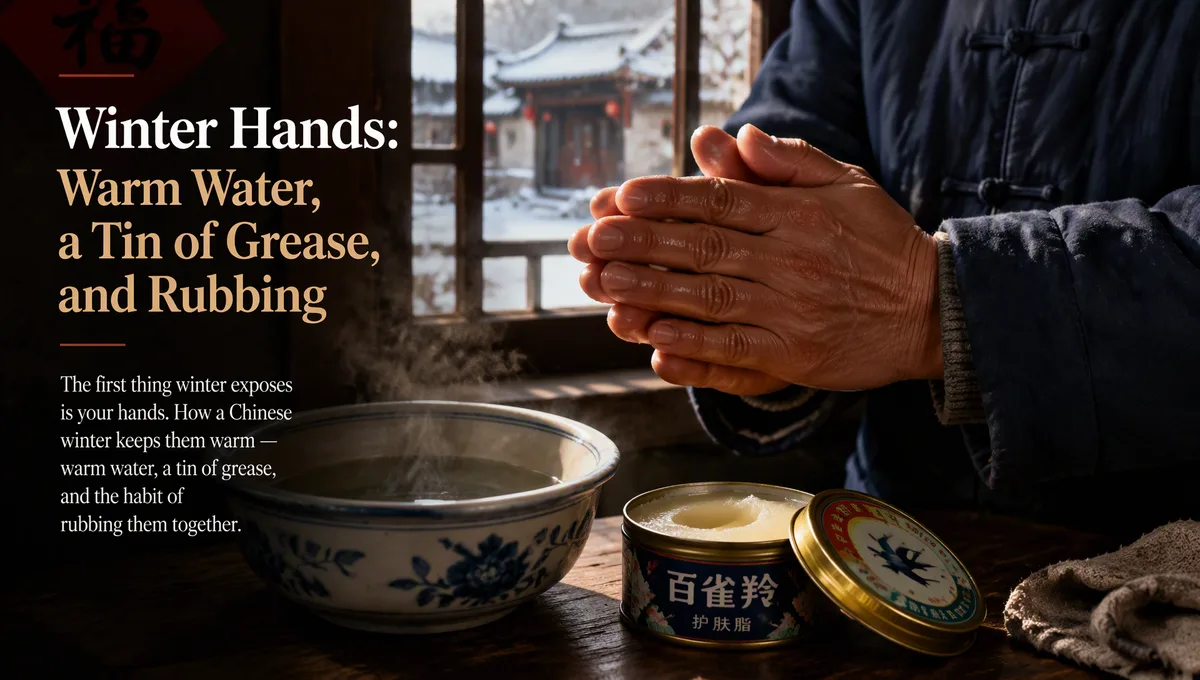
In winter the hands are the first part of a person to touch the weather. No collar, no sleeve, no scarf covers them, and they stay that way all day.
Chinese winters run cold indoors as well as out, in the unheated south especially. So the hands get their own small kit of habits, most of them old and most of them cheap.
The Part That Touches Everything
A face can be left alone. Hands cannot. They turn taps, open doors, hold the handles of a bicycle, and pay for things in coins that have been sitting in a cold pocket.
This is why the winter advice about hands is not about buying something. It is about the order in which things are done.
Wash, Then Dry
The first habit is to keep the hands out of cold water where it can be helped. Dishes are washed in warm water. Vegetables are rinsed under the warm tap. After anything wet, the hands are dried at once, because wet skin loses heat faster than dry skin and chaps in cold air.
This is ordinary housekeeping. It is the same logic as not standing in wet shoes: a small change of habit that the weather turns into a rule.
The Little Tin of Grease
On older Chinese dressing tables sits a small shell the size of a coin, hinged and filled with grease. It is ge li you, clam-shell balm — a tin made from a real clamshell, packed with the kind of oil that stays solid when it is cold.
The tradition is older and less fussy than modern hand cream. Before balm in tubes there was lard, mutton fat, camellia oil. The point was always the same: put something on the hands after they are washed, before they go back out into the cold.
Rubbing the Hands
In a cold park in the morning you will see one thing more than any other: hands being rubbed together. Palm against palm, then one hand over the other’s knuckles.
Cuo shou is the cheapest way to warm them. It is not exercise, and it carries no claim beyond the obvious. It is a person waking up their own hands before the day’s work, the way a cat kneads before it settles. The same motion comes before threading a needle or turning a key in a frozen lock: get the hands ready, then begin.
What Carries the Warmth
Then come the objects. Gloves for the bicycle. Fingerless gloves for the market, so the coins can still be handled. Long cuffs, or a pair of sleeve protectors xiu tao, the fabric sleeves that keep a coat’s ends clean and a wrist covered.
At night there is the tangpozi, a flat brass or tin warmer filled with hot water and put into the bed or carried under a coat. It is the grandmother of the hot water bottle, and in the south it still holds its place. A warmed pair of cuffs does the same work in a smaller way.
When to Stop Doing It Yourself
Rough hands are ordinary in winter. Hands that crack, bleed, or will not warm up are not, and they are the point at which a habit should give way to a doctor. Warm water and a tin of balm are for ordinary days; they are not a substitute for care when something is actually wrong.
Common Questions
Why not just wear gloves all day? Because gloves come off a hundred times a day — to open a door, pay, use a phone, shake a hand. The habits above work in the gaps between glove-off and glove-on.
Is rubbing the hands together a real thing? It is a common sight in parks and bus queues, and it works because motion warms whatever is moved. That is all the claim it needs.
What is clam-shell balm? A very cheap, very old balm sold in a hinged clamshell, still common in markets. It is the ancestor of the hand cream tube.
Does the cold water rule matter indoors too? Yes, especially in unheated homes. Warm water for the dishes is not fussiness; it is the difference between hands that stay soft and hands that crack.
Should I wear gloves to bed? Some people do, over a layer of balm. A warmer at the foot of the bed does the same job for the whole body.
The Smallest Winter Habit
Of everything on this list, the one that takes no money and no planning is the oldest: dry the hands, and rub them until they are warm.
For the wider picture of staying warm indoors, Qiuku and the Chinese winter is the place to start. Why the shoes come off at the door covers the other end of the body, and what goes in the evening foot soak covers the routine that follows. The rest sits in the Wellness section.